A simple routine. A 10-minute guided practice.

Begin calm. Move with intention.

Build your morning around light, gentle movement, breath and sound. Give yourself a little space before the messages, decisions and demands of the day.

Begin the practice 10:36 · Breath + sound · Headphones recommended
Luke Tan guiding a breathwork practice
Guided by Luke Tan · Breath and Sonic Architect

01 / Your morning practice

One comfortable seat. Ten minutes for you.

Begin with the guided practice, or follow the routine below to build a little more structure around it. You can use a chair, a cushion or a mat. No special equipment or experience needed.

Headphones are recommended for the full sound experience. Keep the volume comfortable. Follow the guidance within your own limits, and return to your natural breathing whenever you need to.

Morning Alignment10:36

Press play when you are ready.

Get settled, put your phone on Do Not Disturb and let the guidance give your attention somewhere to rest.

Guided breath · Original soundscape Listen here · 10:36

02 / Keep it simple

Three things to come back to.

Let these be the shape of your morning. Adjust the timing to fit the life you actually have.

ARRIVE

Feel where you are.

Notice the support beneath you. Let your attention return to your body, your breath and the sounds around you.

ENERGISE

Ease into movement.

Find some daylight and move in a way that feels comfortable. Give yourself a gentle transition into the day.

ORIENT

Choose one next step.

Decide what matters this morning. Make it specific enough that you know what to do when the practice ends.

03 / Set up tonight

Make starting the easy part.

Spend two minutes preparing before bed. A familiar corner and a clear cue give you fewer decisions to make when you wake.

  • Pick an everyday cue.

    Choose something you already do: “After I brush my teeth, I sit down for my practice.” Use the same cue tomorrow.

  • Prepare one spot.

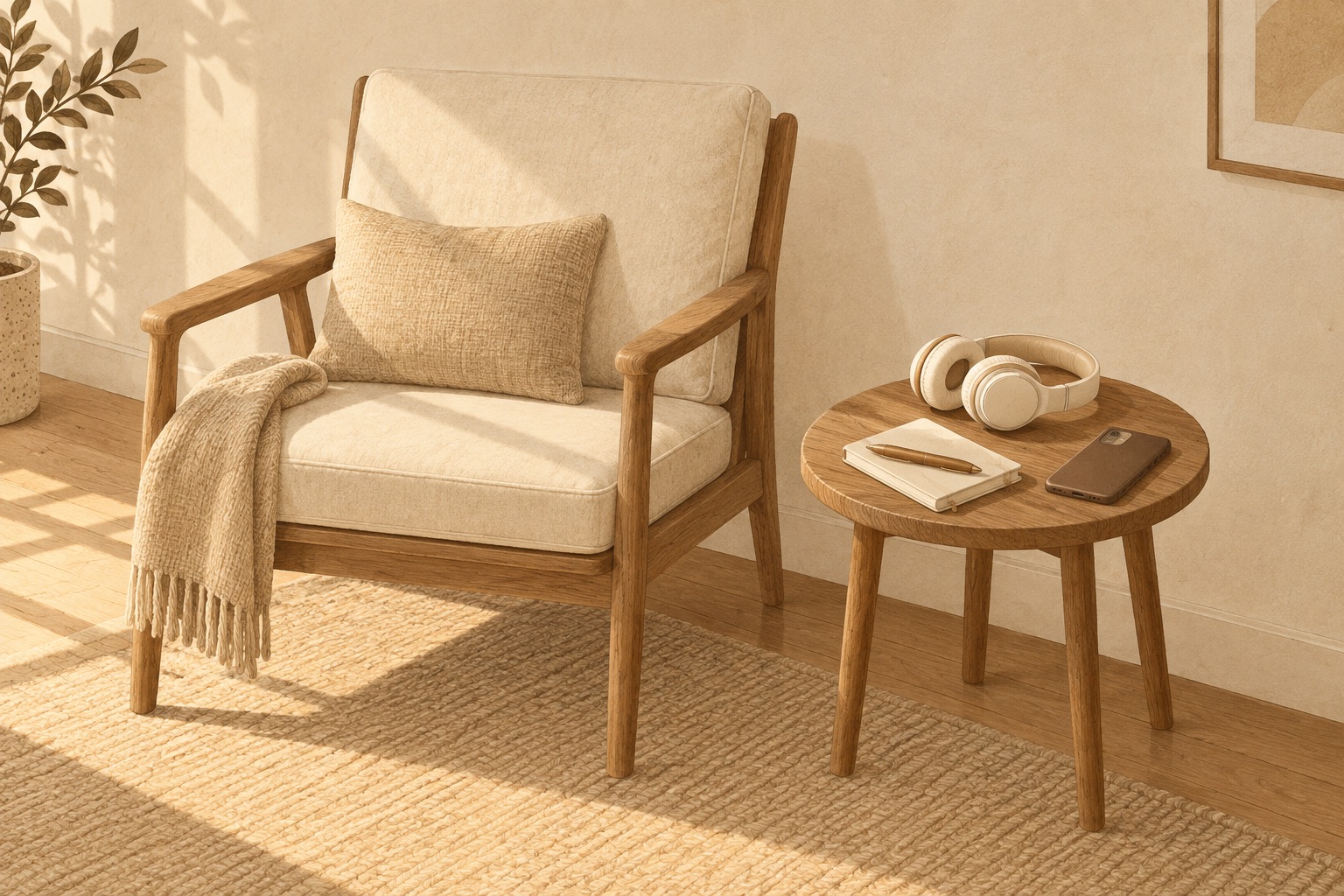
    Set out a chair, cushion or mat where you can feel supported. A quiet corner is enough; the whole room does not need to be tidy.

  • Have the small things ready.

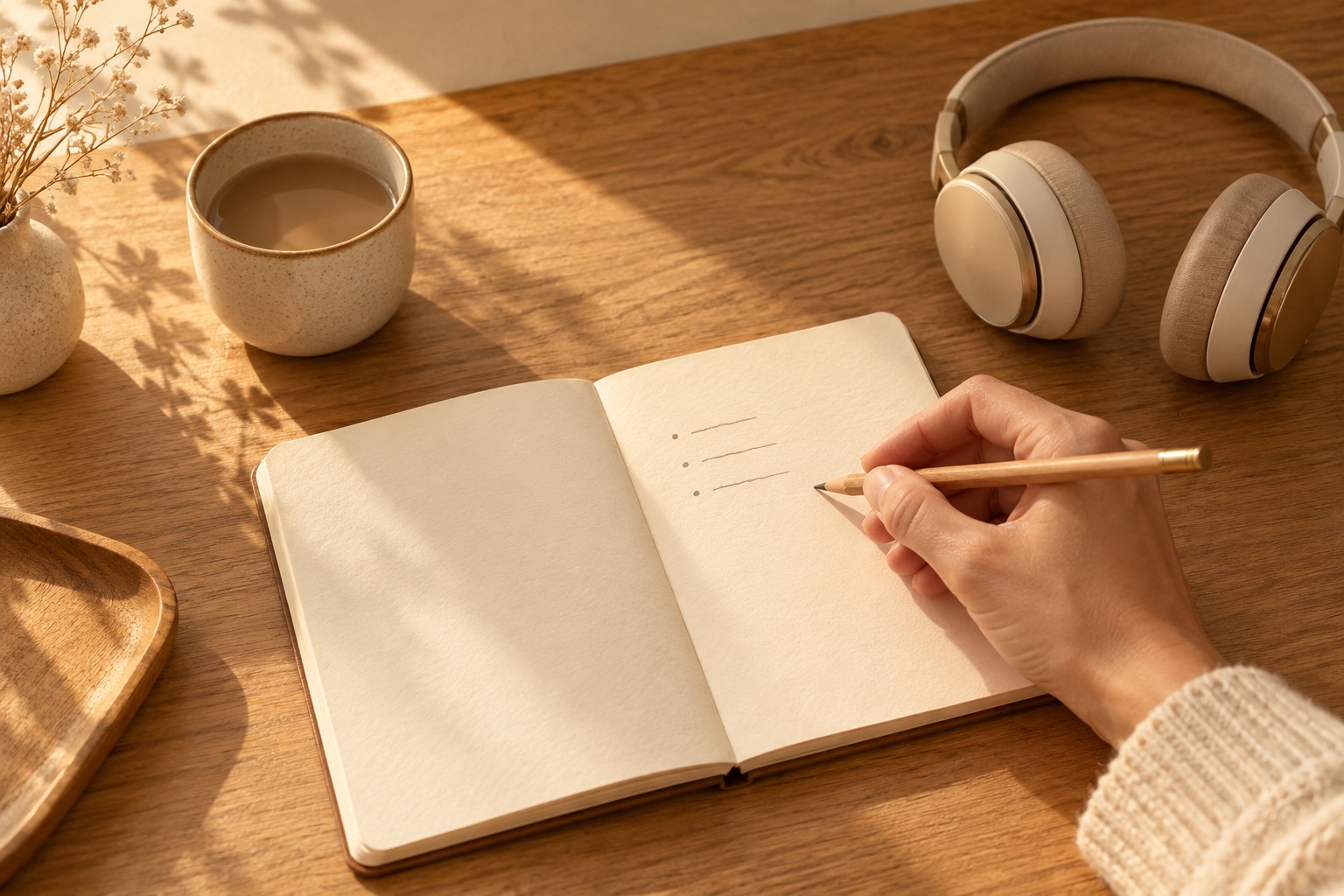
    Bookmark this page. Leave your headphones, a notebook and a pen nearby so you are ready to settle into the full experience.

  • Protect a little time.

    Choose a gap before you open messages. Let anyone at home know you would like ten minutes. Keep your usual sleep time; you do not need an earlier alarm.

04 / Your morning, step by step

Light. Movement. Breath. Direction.

Use this order as a starting point. The daylight step can happen separately from the audio, and the timings are a guide you can adapt.

  1. 01

    After waking

    Let daylight into your morning.

    If it is light outside, take your first drink outdoors or go for a short walk, ideally within the first hour of waking. Daylight helps your body clock recognise the start of the day. If you wake before sunrise, use your indoor lights and step outside later. Never look directly at the sun.

  2. 02

    About 1 minute

    Move gently.

    Roll your shoulders, reach comfortably or walk around the room. Seated movements work too. Choose a small movement that feels good and stay within a comfortable range.

  3. 03

    10 minutes 36 seconds

    Settle in and press play.

    Return to your prepared spot, put on your headphones, silence notifications and start Morning Alignment. When your attention wanders, return to the next cue. You can pause at any point.

    Go to the guided practice ↑
  4. 04

    About 1 minute

    Write one action.

    Finish this sentence: “This morning, I will…” Choose something you can do, such as eating breakfast away from your phone or beginning one task before opening your inbox. Take that first step when you are ready.

05 / For the busy mornings

Keep a two-minute version.

When the full practice does not fit, try this short pause without the track.

  1. 30 seconds: Sit down and feel the support beneath you.
  2. 60 seconds: Notice your natural breathing without changing or holding it.
  3. 30 seconds: Choose one manageable action for the morning.

Try it for a week. Learn what fits.

Keep the same cue and spot. After each practice, jot down one word for how you feel. If you miss a day, return at the next opportunity.

At the end of the week, ask: Was the time realistic? What helped me start? What made it difficult? Adjust one thing and carry on. On interrupted mornings, the shorter version is there for you.

Your plan: “After I ______, I’ll practise in ______. On a busy day, I’ll take two minutes.”

Why morning light? Read the background.

Light and darkness are major signals for the body’s daily rhythm. For the background, see the NIH guide to circadian rhythms. For practical suggestions on daylight and regular sleep times, see Huberman Lab’s Toolkit for Sleep.

06 / A note from Luke

“Breath gives a busy mind something tangible to do. Sound gives the body somewhere to go.”

Music and breath give me a way to pause and listen. I’m interested in what we carry from that pause into a conversation, a working day or time with the people we love. This practice is for anyone. If it helps, return tomorrow and notice what changes for you.

Practice safely: Do not use this audio while driving or in water. Stop if you feel unwell, dizzy or uncomfortable. If you are pregnant or managing a medical condition, seek appropriate professional guidance before beginning a new breath practice.